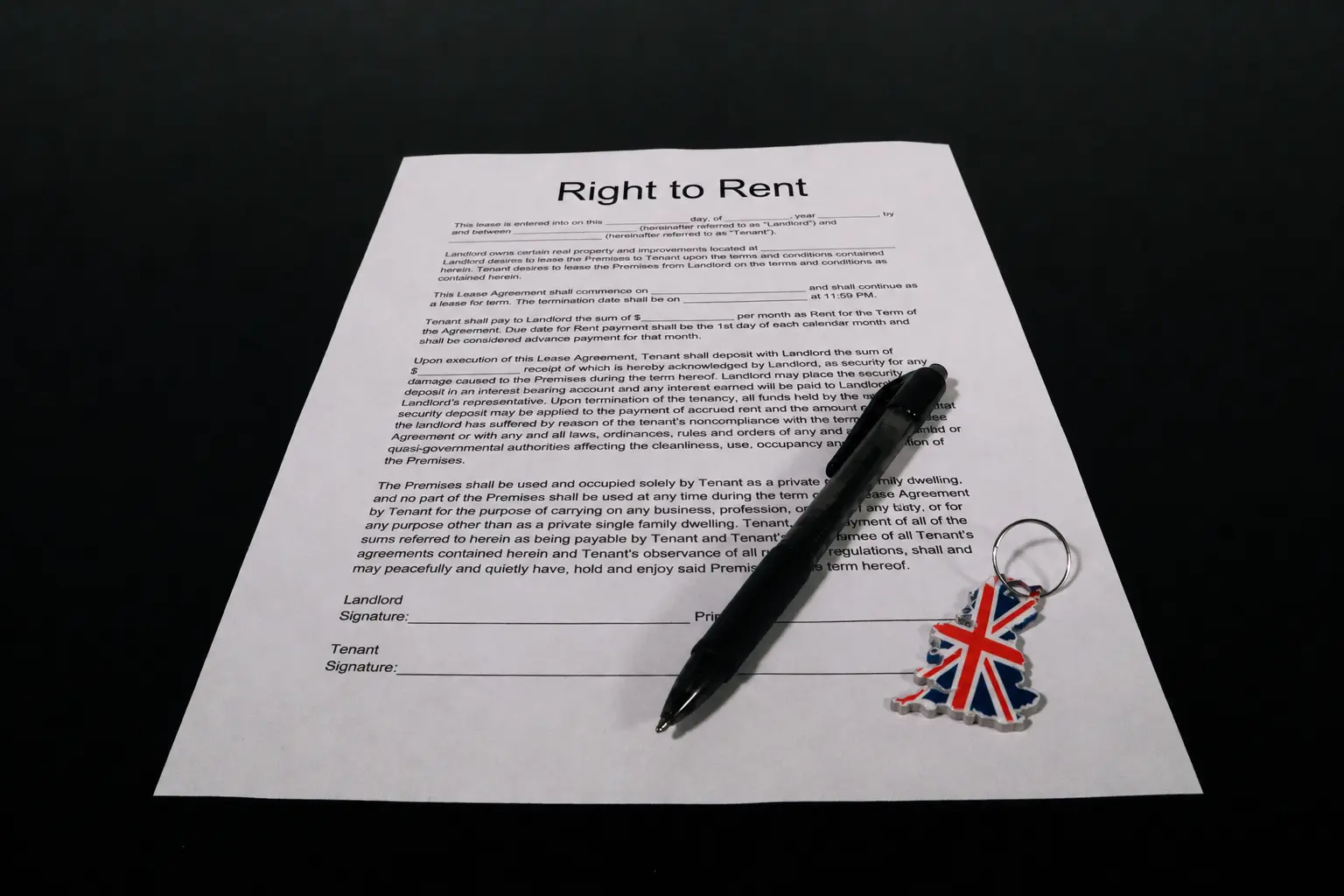
Right to Rent document collection sits at the intersection of property operations, identity handling, and regulatory process. A landlord, letting agent, property manager, or build-to-rent operator may need to collect and handle evidence before a residential tenancy begins in England.
The operational risk is easy to underestimate. The documents involved may contain identity details, immigration status context, dates of birth, addresses, photographs, and other personal information. They may be submitted by applicants who are under time pressure, unfamiliar with the process, and uncertain about which request is legitimate.
Secure collection means treating the workflow as governed document custody. The organization needs a clear request, a controlled submission path, scoped access, review state, audit history, and retention discipline. It should not rely on applicants sending identity records into ordinary email threads where copies, forwards, downloads, and long-term retention become difficult to explain.
This article is not legal advice and does not prescribe how a Right to Rent check should be performed. The UK government’s Checking your tenant’s right to rent guidance is the appropriate starting point for current public guidance. GOV.UK states that the rules about private renting changed on 1 May 2026, and that landlords or agents should check that tenants or lodgers can legally rent residential property in England before a new tenancy.
Start with the defined checking process
Right to Rent handling should start with the organization’s approved process, not with an inbox request. GOV.UK guidance includes sections on how to check, making copies, follow-up checks, and arrangements involving agents or subletting. It also says checks should be made for all tenants aged 18 or over and that landlords and agents should not discriminate.
Those points create a practical governance requirement. The property team needs to know which applicant is being checked, which tenancy or property the check relates to, who is responsible for review, and what evidence is being handled. If the applicant has a limited-time status, the organization also needs to follow the timing guidance that applies to its process.
The document collection system should support that process without making eligibility decisions on its own. It should help staff request evidence consistently, receive submissions through a controlled route, record review activity, and retain the necessary record according to the organization’s policy and current guidance.
Why informal collection creates risk
Many property teams still collect Right to Rent evidence through email. The request is sent from an agent’s mailbox. The applicant replies with a scan or photograph. A colleague forwards the file internally. A version is saved to a tenancy folder. The application moves forward, but the document has already entered several places.
That pattern is common because email is convenient. It is also the reason email is weak for sensitive document collection. Attachments create duplicate custody. Forwarding expands access. Review status becomes buried in conversation history. Retention depends on cleanup across mailboxes, folders, mobile clients, and local downloads.
For a deeper breakdown of the category problem, see why email fails for sensitive document collection. Email can notify, clarify, and coordinate. It should not be the control surface for passports, identity evidence, immigration status documents, or other records used in a regulated property workflow.
Request only through a controlled channel
A secure Right to Rent document workflow should give each applicant a specific request. The request should identify the property or application context, the document or evidence type being requested, the submitter, and the channel through which the document should be provided.
This reduces ambiguity for applicants. A controlled request is more credible than a loose instruction to “send over your ID.” It also reduces confusion when there are joint applicants, guarantors, replacement documents, or separate tenancy records under review at the same time.
For property teams, the structured request becomes the first governance event. It records what was asked for before the document arrives and which tenancy record the submission belongs to.
The broader property workflow is covered in tenant document collection for property teams. Right to Rent evidence is one sensitive part of that larger tenant document environment, alongside proof of income, references, guarantor records, tenancy agreements, and other supporting files.
Separate submission from general correspondence
Applicants still need communication. They may ask questions, request clarification, or need reminders. Email can remain useful for that surrounding conversation.
The document itself should follow a controlled upload path. A dedicated submission route separates sensitive evidence from ordinary correspondence and gives the property team a cleaner point of receipt: who submitted the file, when it arrived, which request it answered, and which workflow now needs review.
For landlords and letting agents handling broader applicant records, secure tenant document collection explains the same principle across IDs, bank statements, payslips, references, and guarantor information. The underlying issue is consistent: sensitive tenant documents need workflow governance, not scattered attachment handling.
Keep access narrow and explainable
Right to Rent evidence should be visible only to the people who need it for the defined workflow. In practice, that may include a letting agent, compliance reviewer, property manager, or other authorized role depending on the organization’s operating model.
Access governance needs more than a folder permission. The system should connect access to role, tenancy context, document type, and review state. If a reviewer needs to inspect the evidence, that access should be part of the workflow record.
CVOR’s security and governance overview describes this layered posture in platform terms: invite-only access, MFA, per-tenant authorization, encrypted custody, immutable audit logging, retention controls, and lifecycle management.
Make copies and retention part of the workflow
GOV.UK guidance includes a section on making copies. Organizations should use the current official guidance and their own legal or operational advice to decide what evidence should be copied, how it should be recorded, and how long it should be retained.
From a custody perspective, copying and retention should not be informal side effects. If the organization needs to keep a record, it should know which record is authoritative, where it is held, who can access it, and what retention rule applies.
Email-led workflows make this hard because the copy used for the check may not be the only copy. The original attachment may remain in an inbox. A forwarded version may sit with another reviewer. A downloaded version may stay on a local device. A shared folder copy may become the official record while the surrounding evidence trail remains fragmented.
Secure collection reduces uncontrolled copies and gives the organization a more coherent custody record. It does not remove the need for a policy. It gives the policy a system to operate through.
Audit trails should begin before upload
An audit trail for Right to Rent document handling should not start when someone opens a file. It should start when the organization creates the request.
A mature audit trail connects request creation, submitter invitation, upload, receipt, access, review decision, status change, retention action, and lifecycle event. It should show the path of the document through the workflow.
This is especially useful when there are multiple applicants or follow-up checks. GOV.UK guidance includes follow-up check sections, and organizations should follow the current timing rules that apply to their situation.
For a fuller explanation of this control model, see audit trails in document collection workflows. The point is not logging for its own sake. The point is a defensible record of what happened to sensitive evidence inside the property workflow.
Avoid discrimination through consistent process design
GOV.UK guidance says landlords and agents should check all tenants or lodgers aged 18 or over before a new tenancy and should not discriminate. A document collection process should reflect that need for consistency.
Consistent process design does not mean every applicant has the same status, same evidence, or same follow-up timing. It means the organization should avoid ad hoc treatment that depends on assumptions, informal judgment, or uneven record handling.
A governed system can support that discipline by standardizing request templates, associating evidence with the correct applicant and tenancy, recording review actions, and reducing reliance on personal inbox practices. It cannot decide how the law applies to a particular person.
From property admin to governed custody
Right to Rent document handling should not be treated as ordinary property administration. It involves sensitive personal evidence inside a process where consistency, record quality, access control, and retention all matter.
The safer operating model is governed document custody. Define the request. Use a controlled upload route. Keep access narrow. Record review decisions. Apply retention through policy. Preserve enough audit history to explain the workflow without rebuilding it from inbox fragments.
CVOR provides governed document collection and custody infrastructure for organizations that collect sensitive records across property workflows and other compliance-sensitive operations. For landlords, letting agents, and property teams, it gives Right to Rent evidence a controlled path from request through review, audit, and lifecycle management.
CVOR governs document workflows for compliance-sensitive organizations.
Explore the platform →Frequently asked questions
What is Right to Rent document collection?
Right to Rent document collection is the process of requesting, receiving, reviewing, copying, retaining, and governing evidence used by landlords or agents when carrying out their defined Right to Rent checking process in England.
Do landlords and agents need to check every tenant?
GOV.UK guidance says landlords and agents should check all tenants or lodgers aged 18 or over before a new tenancy in England and should avoid discriminatory checking practices.
Is email suitable for Right to Rent documents?
Email can move files, but it is weak for controlled document custody because attachments can be forwarded, duplicated, downloaded, retained, and separated from the request and review record.
Does secure collection replace Right to Rent legal advice?
No. Secure collection supports the organization's defined checking process with stronger intake, audit, access, and retention controls. It does not determine legal eligibility or replace legal advice.