Collect claims evidence without fragmented email chains.
Bring medical records, receipts, photographs, assessor reports, repair estimates, and other claims supporting documents into one controlled insurance evidence workflow.
01
One evidence record for each claim, policy request, or customer workflow.
4
Core stages: request, submit, review, and complete.
0
Claims evidence needs to depend on fragmented forwarding chains.
Claims document collection becomes harder with every participant and follow-up request.
A claim may require policy documents, photographs, receipts, loss assessor reports, medical records, police reports, repair estimates, correspondence, and third-party statements.
Customers, brokers, handlers, assessors, and specialist reviewers may all contribute evidence. Email makes it difficult to see what is complete, what is final, and which documents informed a decision.

A claims system cannot fix an evidence intake path that remains fragmented.
Create distributed copies as evidence moves between customers, brokers, handlers, and reviewers.
Can reduce email volume without showing review activity, document status, or specialist decisions.
Store documents but may not show why evidence was required or how it moved through review.
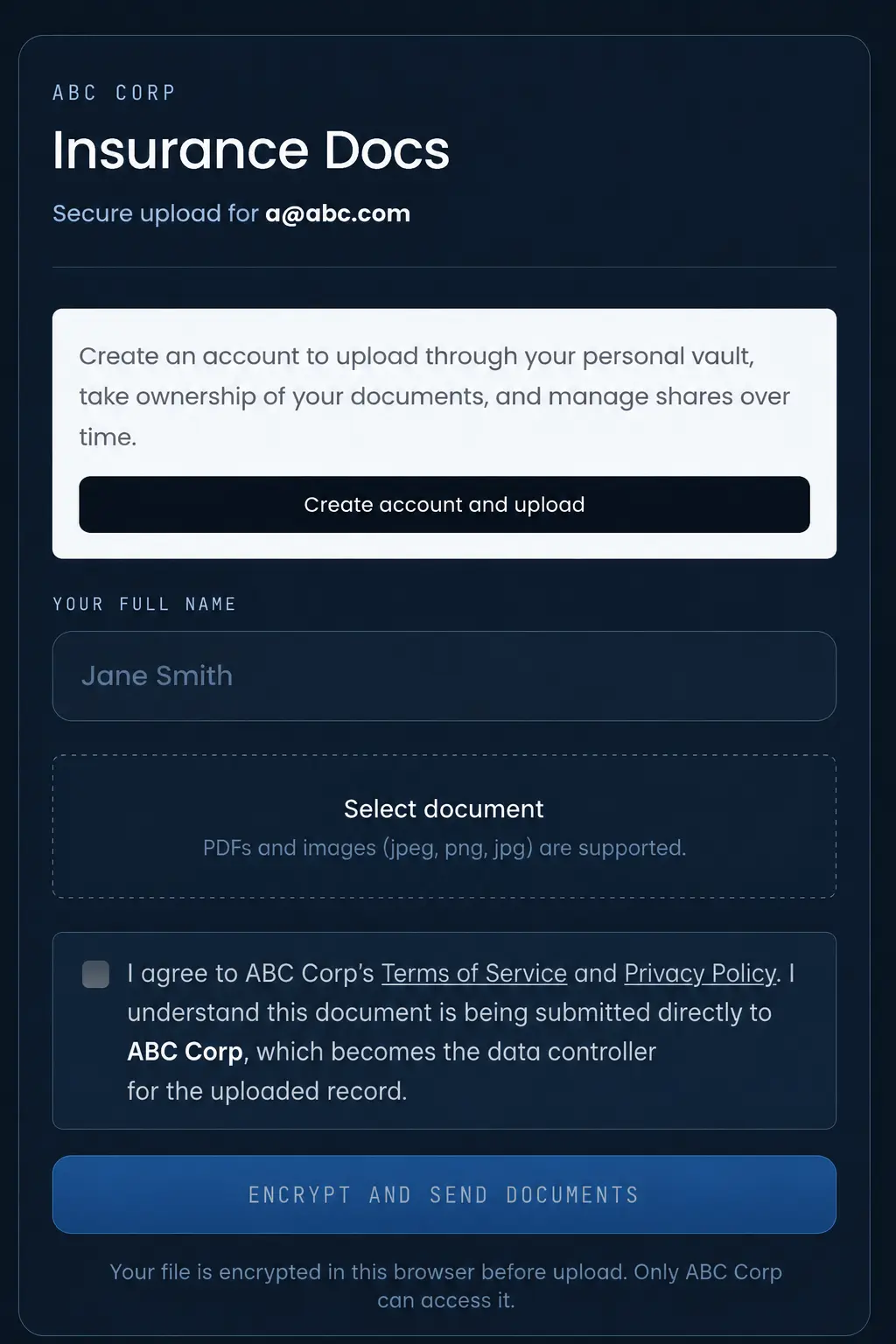
Claims evidence management from first request to final review.
Ask for defined evidence tied to the claim, policy, customer, or complaint workflow.
Receive documents through a governed portal rather than scattered email chains.
Give handlers and specialist reviewers one record for evidence status and access.
Apply audit logging, access boundaries, and retention rules around claims evidence.
Traceability and access control around the operational claims workflow.
Audit trail
Record when evidence arrived, who accessed it, and what lifecycle actions occurred.
Scoped access
Limit medical, identity, financial, or specialist records to the right reviewers.
Document refresh
Collect additional or corrected evidence without losing the claim context.
Customer confidence
Give claimants a controlled path when they are sharing sensitive supporting records.
Designed to support privacy, complaint, and operational review requirements.
Insurance workflows may intersect with UK GDPR, especially where medical records or other special category data are involved. Records may also become relevant to complaints, Financial Ombudsman Service review, internal audit, and regulatory scrutiny.
CVOR does not define the insurer's regulatory obligations or claims decision process. It provides governed document collection and custody with stronger auditability, access control, and lifecycle management.
Insurance document workflow questions
What insurance documents can CVOR help collect?
CVOR can support governed intake of claims evidence, policy records, medical documents, receipts, assessor reports, photographs, and supporting correspondence.
Does CVOR replace a claims management system?
No. CVOR controls claims document collection and custody and can operate alongside the insurer's claims or policy administration system.
How does CVOR improve insurance evidence management?
It connects requested evidence, customer submissions, review access, replacement documents, and lifecycle actions to one claims workflow record.
Move insurance document workflows into governed custody.
Sales-led onboarding. We assess document types, reviewer roles, access boundaries, and retention requirements before onboarding.