Collect employee onboarding documents without inbox sprawl.
Request passports, right-to-work evidence, payroll information, employment records, and signed policies through one new hire document collection workflow.

01
One intake record for each candidate, employee, or onboarding workflow.
4
Core stages: invite, upload, review, and complete.
0
Payroll and identity records need to remain scattered across recruiter and HR inboxes.
New hire document collection should not delay a start date.
HR teams may need passports, visas, right-to-work evidence, tax forms, payroll details, bank information, references, medical certificates, signed policies, and qualification records before a new employee starts.
When those documents arrive across recruiter inboxes, HR mailboxes, and payroll threads, teams lose time checking what is missing and candidates receive repeated requests.
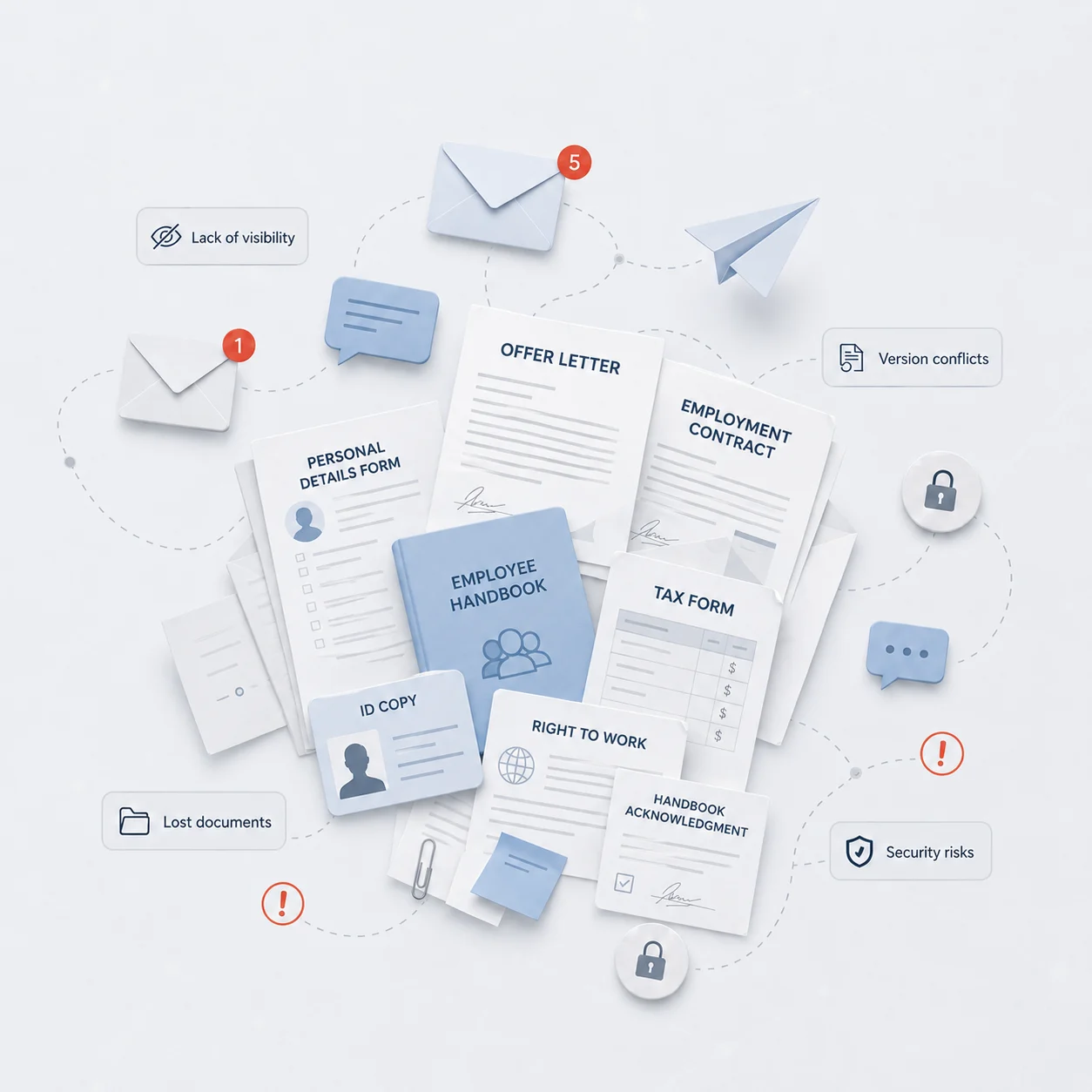
HR systems may store employee records while the collection process still happens in email.
Copies identity and payroll records across recruiters, HR, payroll, and local downloads.
Often expose mixed record types through broad team permissions.
May store employee records while pre-employment collection still happens outside the system.
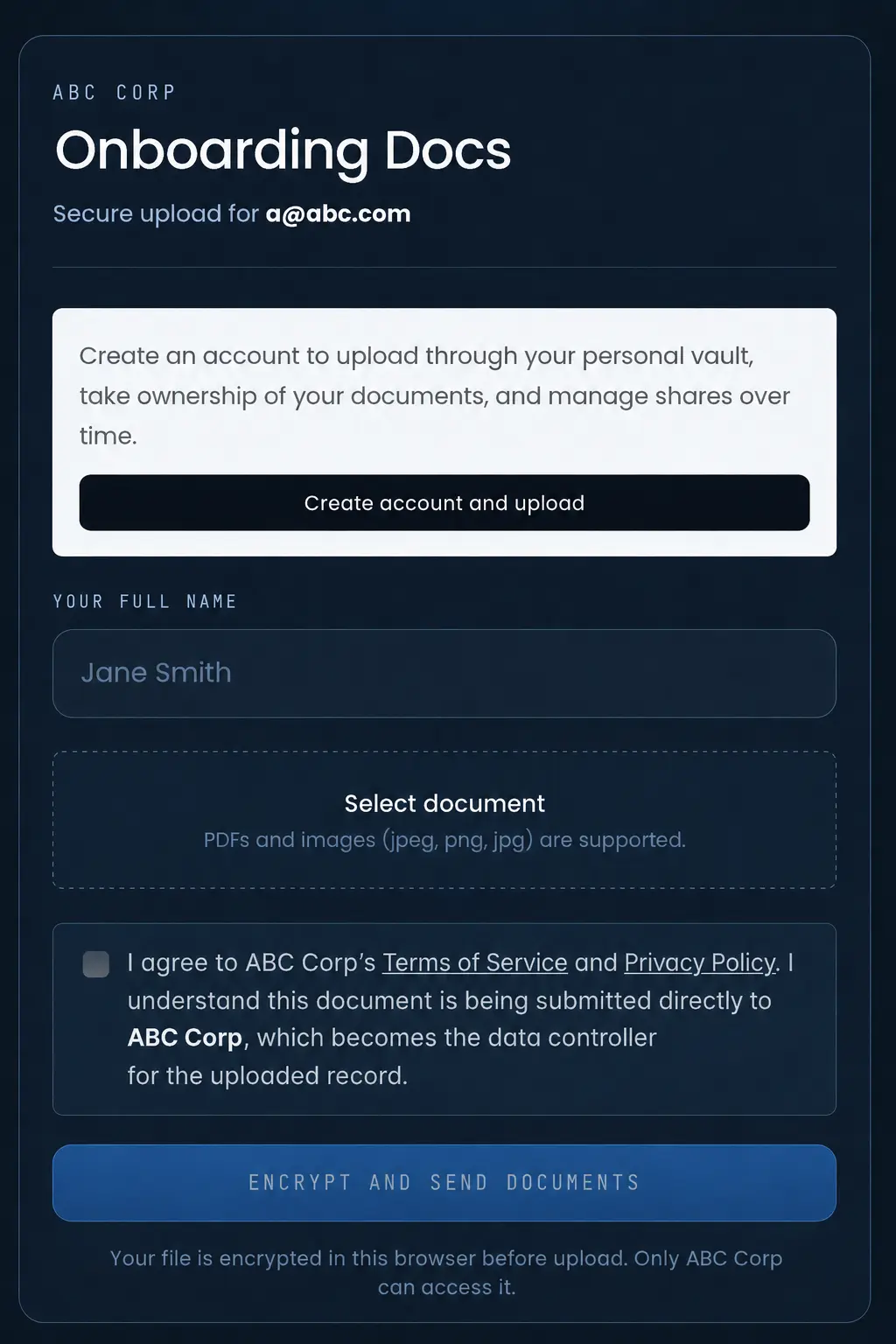
One HR document collection workflow for every new hire.
Send the candidate or employee a scoped request for required onboarding documents.
Receive identity, payroll, policy, and evidence records through a controlled portal.
Let HR and compliance users review from one workflow record with audit visibility.
Apply role-based access and lifecycle rules once onboarding is complete.
The controls HR needs without slowing onboarding.
Audit trail
Record request, receipt, review, access, and lifecycle actions.
Scoped access
Separate handling for payroll details, right to work evidence, medical notes, and policy records.
Document refresh
Collect updated evidence or corrected details without thread duplication.
Employee confidence
Give candidates and new hires a credible place to submit private records.
Designed around employment record handling and data protection principles.
Employee records are personal data under UK GDPR. Organizations need to consider purpose limitation, data minimisation, security, and storage limitation.
CVOR does not determine the employer's legal basis, right to work procedure, or HR retention schedule. It gives HR and compliance teams a governed system for collecting sensitive onboarding documents.
Employee onboarding document questions
Does CVOR replace an HRIS?
No. CVOR governs sensitive document collection and custody. It can support onboarding document workflows alongside an HRIS.
What employee onboarding documents can CVOR collect?
CVOR can support collection of passports, right-to-work evidence, payroll information, bank details, employment records, qualifications, and signed policies.
How does CVOR reduce new hire document chasing?
Each employee receives a defined request, while HR can see which documents have arrived, which are missing, and which require replacement.
Move onboarding document collection into governed custody.
Sales-led onboarding. We assess document types, reviewer roles, access boundaries, and retention requirements before onboarding.